
The Death of Perfection: Why Brands are Leaning into the "Ugly" Truth
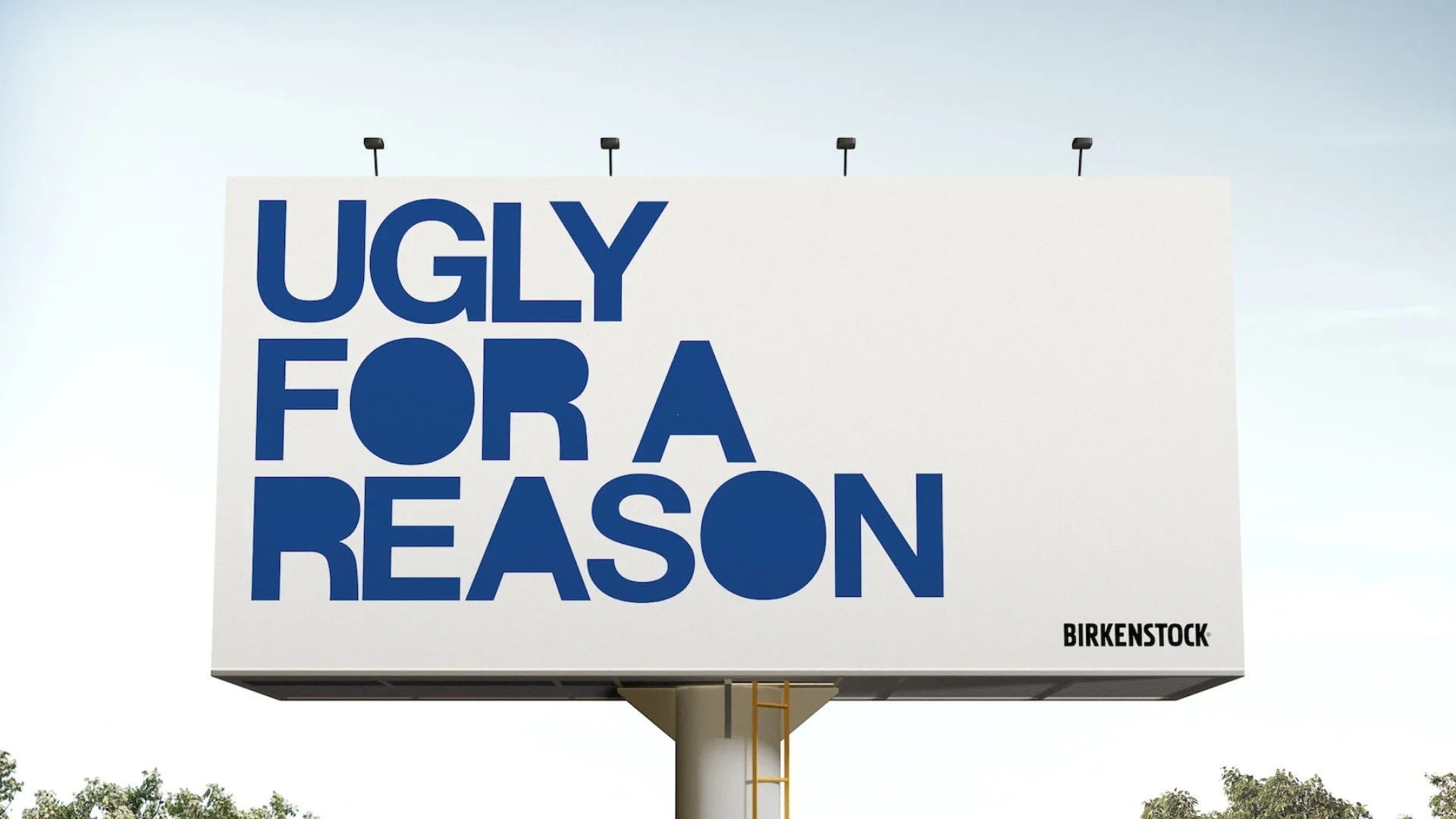
The Death of Perfection: Why Brands are Leaning into the "Ugly" Truth
At ARROW VANE, we often talk about the vane - that small, unassuming feather that stabilises the arrow. Without it, the arrow has all the power but none of the direction. In 2026, the "vane" for modern brands isn't a glossy filter or a high-res AI render. It’s something much rarer: The Truth.
We are currently navigating a "Content Crisis of Faith." With the advent of hyper-realistic AI tools, we’ve all become digital detectives. We look at a stunning landscape and wonder if the mountains were prompt-engineered. We read a "thought leadership" post and check for the tell-tale cadence of a large language model.
When everything can be faked, the only thing left to value is the unfiltered, unpolished, and unhinged.
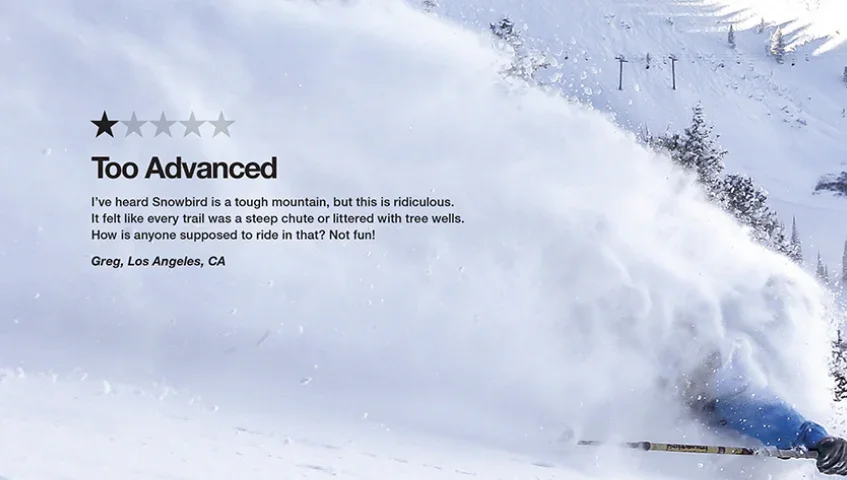
Snowbird Ski Resort
The Friction of the One-Star Review
Usually, marketing is the art of hiding the "scuff marks." But some of the most successful brands of the last few years have realised that the scuff marks are exactly what proves they are real.
Take Snowbird Ski Resort. Instead of using AI to generate the "perfect" powdery day, they took a one-star review from a disgruntled visitor who complained that the mountain was "too steep" and "too difficult." They didn’t hide it; they put it on a billboard.
By leaning into a "negative" that was actually a core truth of their product, they didn't just find their audience—they built a wall of trust that no "perfect" AI campaign could ever scale.
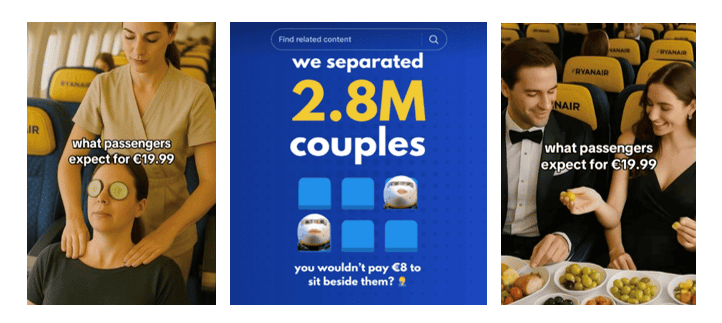
Image credit: Maverick Group
The "Pantomime Villain" Strategy
Then there is Ryanair. In a category (airlines) where every competitor uses stock-style imagery of smiling families and legroom that doesn't exist, Ryanair does the opposite. Their social media is famously "unhinged," mocking their own lack of luxury and their customers' complaints.
It’s the Honesty of Being Cheap. By being the first to admit they are a "bus in the sky," they remove the scepticism. You can’t "expose" Ryanair because they’ve already exposed themselves. In a sea of synthetic corporate empathy, their bluntness feels refreshingly human.
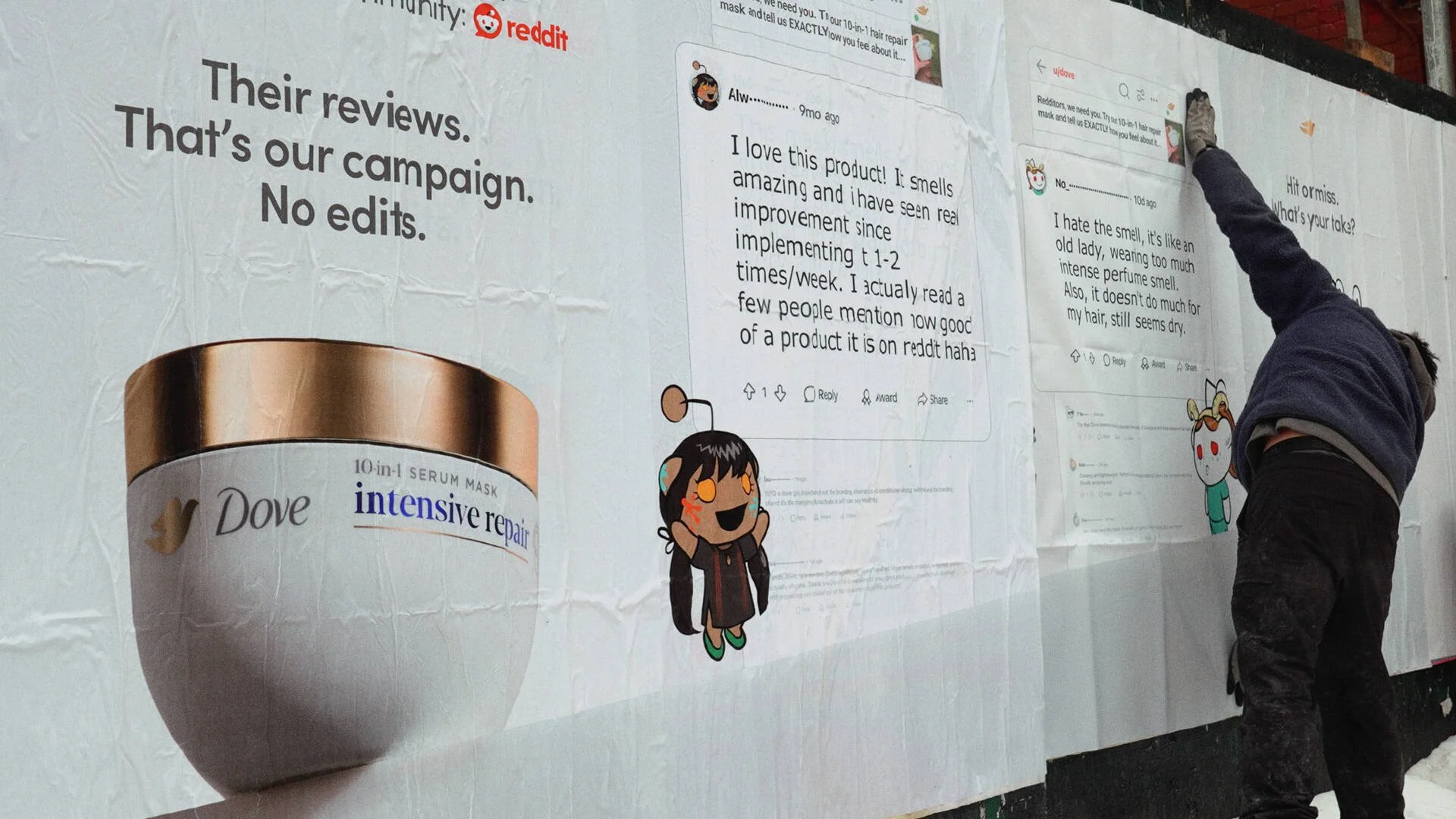
Image credit: Ads of the World
Radical Transparency: Dove and Oatly
Even the "big" brands are pivoting. Dove recently bypassed the creative studio entirely for their "r/eal reviews" campaign, taking unedited, sometimes harsh Reddit threads and putting them front and center. They didn't fix the grammar; they didn't polish the sentiment. They let the "Snoo" avatars speak for the brand.
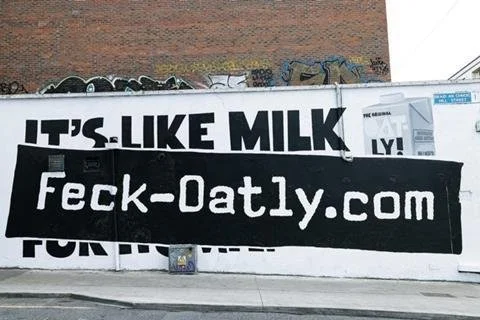
Similarly, Oatly has built an entire ecosystem around their own "failures." From their feck-oatly.com site to printing hate-mail comments on their cartons, they have turned "pre-emptive confession" into a superpower.
Why does this work? * AI cannot be self-deprecating: It can simulate a joke, but it can’t take a genuine hit to its ego.
Perfection is a red flag: In 2026, if a brand looks too perfect, our brains now default to "Deepfake."
Action over Hype: These brands aren't just saying they are honest; they are proving it by showing the "ugly" side.
The Human Takeaway
The lesson is clear: Stop chasing the "Perfect" and start chasing the "Proven." If your brand story doesn't have a few "human" flaws—a bad review you’ve addressed, a raw "behind the scenes" moment, or a technical limitation you’re honest about - you’re going to get lost in the synthetic "slop" that is currently drowning the internet.
The brands that will survive the next five years aren't the ones with the best prompts. They are the ones who have the courage to be unpolished.
David Gough
david.gough@arrowvane.com | LinkedIn